10 Startup Growth Tools Compared for Founders in 2026
You can feel the problem before you can name it. The product works, a few users are interested, and the week disappears into tabs, subscriptions, and half-finished experiments that never quite become a repeatable growth loop. That's where most founders end up collecting startup growth tools too early, buying for hope instead of stage. This list keeps the focus on what a solo founder needs, from finding demand to reaching prospects, converting visitors, keeping users, measuring change, and connecting the stack, with the practical trade-offs laid out plainly. For a broader framing on how growth systems get organized, the scaling tips from MakeAutomation are a useful companion read.
Table of Contents
- 1. Ahrefs
- 2. Bazzly
- 3. Apollo.io
- 4. lemlist
- 5. PhantomBuster
- 6. Unbounce
- 7. Intercom
- 8. Mixpanel
- 9. Hotjar
- 10. Zapier
- Top 10 Startup Growth Tools, Features Comparison
- Build One Growth Loop Before Adding Another Tool
1. Ahrefs
Ahrefs earns its place first because demand discovery is still the cleanest starting point for a founder who doesn't yet know which message will stick. Sean Ellis's 2010 “growth hacker” milestone matters here, because the discipline moved growth away from one-off promotion and toward systematic experimentation across marketing, product, engineering, analytics, and testing, which is exactly the mindset Ahrefs supports through keyword research and competitive analysis. The tool is strongest when you need to figure out what people are already searching for, what competitors are ranking on, and where your own content can realistically win. You can start with the Ahrefs website and, if you're a verified site owner, test the free tier before moving up.
Where it fits
Use Ahrefs when you need a demand signal, not just a content calendar. Site Explorer is the practical starting point for backlink and keyword gap analysis, while Keywords Explorer helps you cluster topics and judge intent before you write. That matters because startup content only compounds if it maps to real intent, not vanity traffic.
Practical rule: If you can't explain what action a page should drive, you're not doing growth research, you're making a blog post list.
The trade-off is cost and depth. The full platform gets expensive as soon as you need more seats or API access, so it makes sense when organic acquisition is already part of the plan, not when you're still guessing whether SEO belongs in your mix. Use it to validate a narrow slice of the market, then track ranking movement and technical issues through Rank Tracker and Site Audit.
2. Bazzly
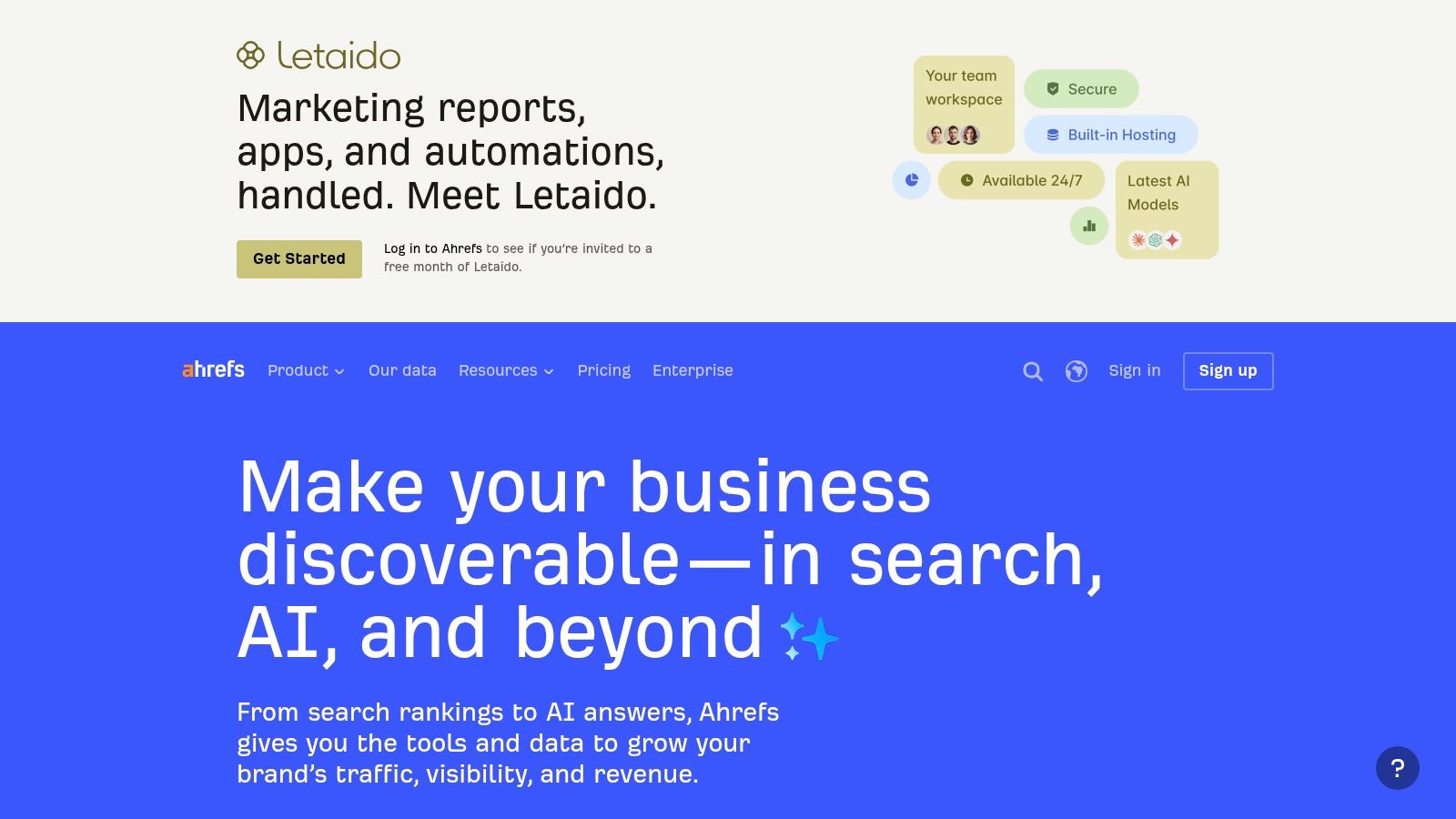
Bazzly fits the stage where a solo founder needs real conversations, not more channel theory. It watches subreddits continuously, spots threads where people are already asking for help, and drafts replies that stay close to the discussion so they do not read like pasted outreach. The product page makes the workflow clear, which matters when you need to move fast without a heavy setup burden.
What works and what doesn't
Bazzly combines 24/7 subreddit monitoring, AI-generated replies, one-click personalized DMs, and warmed-up accounts with smart upvotes, so useful comments have a better chance of being seen. For founders who need qualified conversations more than broad reach, that creates a direct path to measurable acquisition activity. The product is built for founders who want a repeatable Reddit workflow with measurable outcomes.
The trade-off is simple. Reddit still punishes sloppy execution. If your offer does not match the thread, or your reply reads like an ad, automation will not save it. Bazzly reduces manual searching and posting time, but it does not replace judgment, and it does not remove the need to follow community rules. Use it as a focused acquisition channel and measure actual outcomes, not comment volume.
3. Apollo.io
Apollo.io is the first tool most founders reach for when they've found a market and need a practical way to reach it. It pairs a B2B contact database with outbound sequencing, so you can build a target list and send multi-step email, phone, and LinkedIn outreach without stitching together several separate tools. The best use case is simple: validate an ICP, get replies, and see whether a segment is worth pursuing before you hire help. Start at the Apollo.io website, then connect it to your CRM so list building doesn't become a dead-end activity.
For founders, the true value is consolidation. Apollo reduces tool sprawl by combining prospect data, sequencing, intent signals, and basic deal tracking in one place, which is useful when you're still operating lean. The risk is data hygiene. You'll still need to validate and clean lists, because bad contact data can waste time fast, and deliverability discipline still matters if you don't want to burn your domain.
I'd use Apollo when the question is, “Can we consistently start conversations with the right accounts?” That's more important than sending the highest possible volume. If you need a broader outbound workflow reference, the Bazzly B2B lead generation tools guide is worth a look for channel context.
4. lemlist
A solo founder usually reaches for lemlist after the offer is clear and the work shifts to prospecting without sounding generic. It is a cold email and multichannel platform with warm-up utilities, personalization features, inbox rotation, and LinkedIn steps on higher tiers, so it belongs in the “reach prospects” stage, not the “build demand” stage. The lemlist website is straightforward to use, which matters when the same person is handling sales, marketing, and closing.
Where it helps solo founders
lemlist is useful when you want a fast setup and practical deliverability guidance. The UI is approachable, the workflow is quick to launch, and the community around it gives indie founders examples they can adapt without rebuilding everything from scratch. The setup also gives you a chance to check sender health before the first campaign, and running an email spam test before your first send catches deliverability mistakes that can burn a domain early.
The trade-off is cost and scale. Seat-based pricing can climb once you add teammates, and data enrichment often becomes another line item. That makes the economics better for a solo founder or very small team with a focused list than for a large outbound operation.
Used well, lemlist supports tighter sequences and better follow-up rather than higher blast volume. That is the right fit when you want to prove outbound with fewer, better-targeted sends and a clear next step for replies.
5. PhantomBuster
PhantomBuster fits the stage where you need to turn a hunch into a usable prospect list. It ships ready-made automations for LinkedIn, X, Instagram, and Google, so you can test scrappy acquisition ideas without writing custom code. The PhantomBuster website works best as a lab for controlled experiments, and for more scraping workflow ideas, see these tools from Clearcote Labs before you build a Phantom from scratch.
How operators use it
The appeal is speed. You can run small workflows, export results to CSV, Sheets, or a CRM, and connect steps without waiting on engineering. That helps solo founders test unusual sourcing ideas, such as finding people who commented on a topic or pulling structured data from a social platform.
The trade-off is fragility. Platform changes can break automations, and you still have to respect terms of service and account risk. PhantomBuster works best when the process is narrow, repeatable, and watched closely. A chain that needs manual babysitting every day is a disguised chore, whatever you call it.
6. Unbounce
Unbounce is the tool you want when traffic exists, but conversion is the problem. It gives non-technical founders a fast way to publish landing pages, popups, and sticky bars, then test offers with built-in A/B testing and Smart Traffic. The Unbounce website is especially relevant once you've got a channel that can send visitors and you need to turn that attention into signups or leads without asking a developer for every change.
The main advantage is control. You can spin up pages quickly, match ad copy with Dynamic Text Replacement, and wire forms into the rest of your stack. That keeps the test cycle short, which is what early teams need. If a headline or CTA is weak, you can change it today instead of waiting for a sprint.
The trade-off is scale. Lower plans cap traffic, and more complex experimentation can outgrow the native testing model. So Unbounce is a strong solo-founder choice for conversion-focused pages, but only if you keep the scope tight. Don't try to rebuild your entire website inside it. Use it for specific offers, specific traffic sources, and clear conversion goals.
7. Intercom
Intercom matters once users are arriving and the question shifts from “Can we get them in?” to “Can we keep them moving?” It combines support, live chat, help content, proactive messaging, product tours, and an AI agent called Fin, which makes it useful for onboarding and issue resolution in one place. Start with the Intercom website if your team is already seeing repetitive questions or drop-off points that need a fast response layer.
Best use case
The strongest case for Intercom is reducing support friction while collecting product signals. A founder can watch where users stall, send targeted nudges, and resolve routine questions without adding a separate support stack. That's valuable when every conversation matters and the same issue keeps appearing in onboarding or activation.
The downside is pricing complexity. When per-seat costs meet outcome-based AI pricing, the bill can be harder to predict than a simple flat plan. It's a good fit if you want one platform for support and engagement, but it's not the cheapest path for a tiny team that only needs basic chat. Use it when the team needs customer-facing automation, not just a messaging widget.
If a support question repeats three times, it's already a product issue, not a support issue.
8. Mixpanel
Mixpanel is what you bring in when the founder stops arguing from instinct and starts asking which actions change behavior. It gives event-based analytics for funnels, cohorts, retention, and session replay, which is a direct fit for activation and retention work. The Mixpanel website also matters because its Startup Program can lower the early analytics burden for eligible companies, which is rare in a category that usually gets expensive as soon as events pile up.
What to watch
Mixpanel is strong because non-analysts can still segment thoroughly and answer real product questions quickly. If activation drops after a workflow change, or retention differs by behavior, you can see it without waiting for a dashboard rewrite. That makes it one of the most useful startup growth tools for measuring what changed after a launch or experiment.
The warning is instrumentation quality. Poor event design creates bad conclusions, and the platform won't fix that. It also gets more expensive as usage grows after the free year, so don't treat it like a forever-cheap tool. If you want sharper growth calls, pair it with a written metric tree and only track the events that matter to your activation or retention loop.
The Bazzly growth hacker tools guide is a useful parallel if you're mapping measurement to a Reddit acquisition workflow.
9. Hotjar
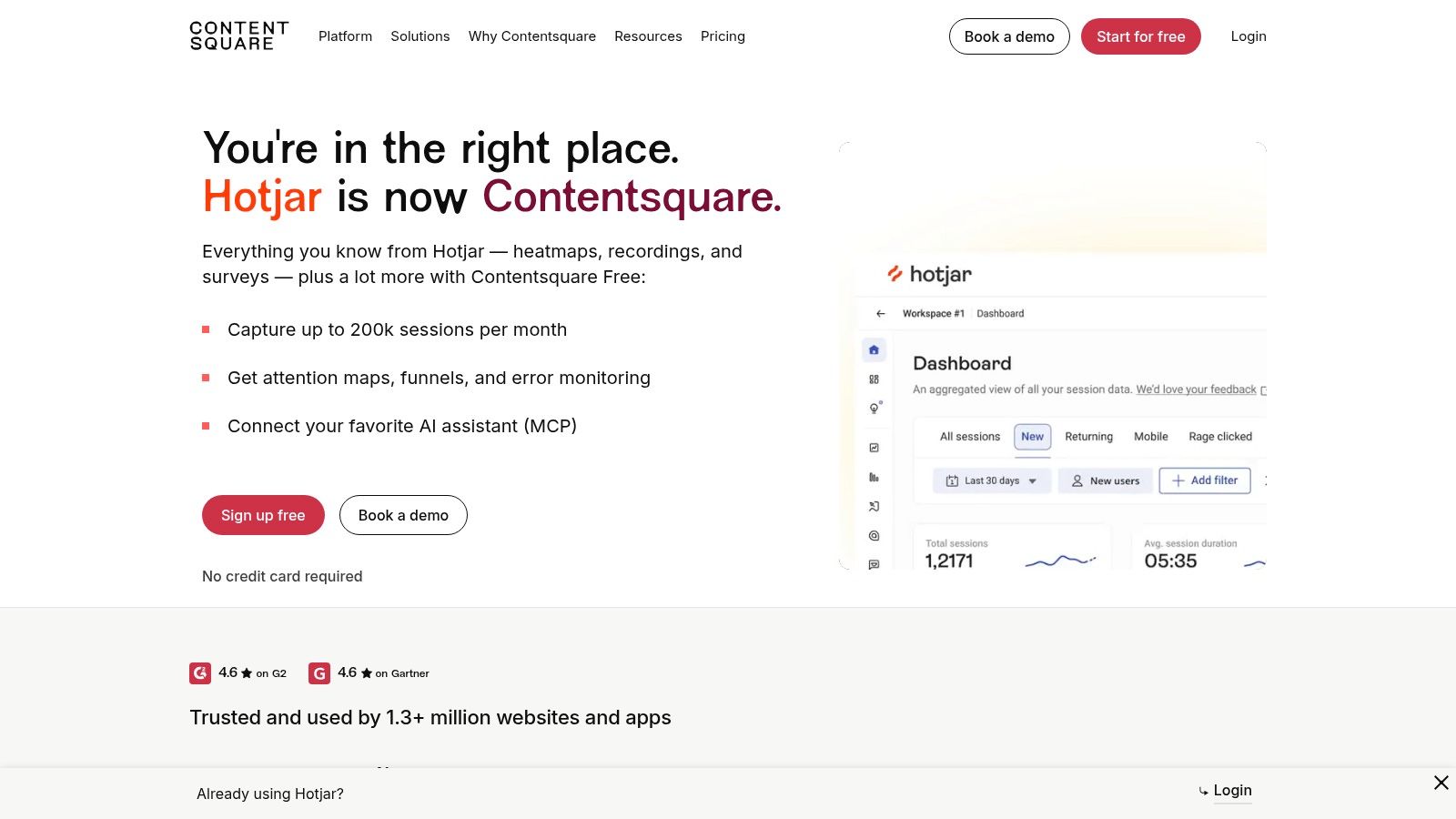
Hotjar earns its spot because product analytics alone rarely explain why people leave. Heatmaps, session recordings, funnels, and on-site feedback show where users hesitate, rage-click, or quit, which is exactly the kind of qualitative layer a solo founder needs when fixing conversion issues. The Hotjar website is still a practical starting point for small teams that want fast insight without a heavy analytics setup.
Why it stays useful
Hotjar is at its best when you need to connect “what happened” with “why it happened.” A founder can watch recordings, read survey responses, and spot friction that pure numbers hide. That makes it a strong companion to Mixpanel, not a replacement for it.
The downside is that pricing and tier naming have changed since the acquisition, so plan names can be confusing. Costs also rise when traffic grows and you capture more sessions. I'd use Hotjar early, before the team has a long backlog of UX guesses. It's particularly useful when a page gets visitors but the conversion rate feels weaker than it should.
10. Zapier
A solo founder usually reaches for Zapier once manual handoffs start slowing the growth loop. It moves data between apps and triggers actions across lead capture, enrichment, outreach, billing, and reporting. The Zapier website is where many teams end up after they realize the workflow is really a chain of repeated handoffs.
The payoff is practical. You can route leads, send follow-ups, update CRM records, and trigger internal alerts without pulling in engineering time. That matters when tools like Apollo, Intercom, Mixpanel, or a landing page builder already sit in the stack and need to stay in sync. For a small team, Zapier often separates work that depends on memory from work that runs on its own.
The trade-off is task-based cost. Sloppy automations can drive usage up fast, and heavier data work belongs elsewhere. Zapier should connect systems, not act as a warehouse. Use it to remove repetition; a broken process stays broken no matter how well it is wired.
For handoffs between channels, see this guide on auto-responding on Twitter.
Top 10 Startup Growth Tools, Features Comparison
| Tool | Core features | Quality ★ | Pricing / Value 💰 | Target 👥 | Unique strengths ✨ |
|---|---|---|---|---|---|
| Ahrefs | Backlink & keyword explorer, rank tracking, site audit | ★★★★★ | 💰 Mid–High: starts ~ $99+/mo; higher tiers for API | 👥 SEO teams, content marketers, growth leads | ✨ Large crawl index; strong competitor + keyword workflows |
| Bazzly 🏆 | 24/7 subreddit monitoring, AI replies, warmed-up accounts, smart upvotes, one-click DMs | ★★★★★ | 💰 ~$99–$199/mo + credit-based actions (verify current plan) | 👥 Busy founders, early SaaS, small B2B teams | ✨ Autopilot Reddit-to-search growth; SEO/AI-aware placements; reduces manual outreach |
| Apollo.io | B2B contact database, sequencing, enrichment, CRM sync | ★★★★ | 💰 Low–Mid: free tier; paid plans from ~mid-$ range | 👥 SDRs, founders doing outbound, B2B marketers | ✨ Large contact data + integrated outbound sequencing |
| lemlist | Cold email + multichannel campaigns, personalization, warm-up tools | ★★★★ | 💰 Mid: per-user pricing (starts ~ $59/mo) | 👥 Founders validating outbound, small sales teams | ✨ High personalization + deliverability focus and templates |
| PhantomBuster | No-code scraping & automation ("Phantoms"), scheduling, outputs to CSV/CRM | ★★★★ | 💰 Low–Mid: tiered, pay-per-automation / usage | 👥 Growth hackers, solo founders, data scrapers | ✨ Fast experimentation, rich recipe library, chaining automations |
| Unbounce | Drag‑and‑drop landing pages, A/B testing, Smart Traffic | ★★★★ | 💰 Mid: starts ~ $80+/mo; visitor caps on lower plans | 👥 Marketers, growth teams, agencies | ✨ Rapid CRO pages + AI traffic routing (Smart Traffic) |
| Intercom | Unified inbox, live chat, in-app messages, AI agent (Fin) | ★★★★ | 💰 High: per-seat + outcome/AI fees (can scale up) | 👥 Support/product teams, SaaS businesses | ✨ End-to-end engagement + AI resolution + product tours |
| Mixpanel | Event analytics, funnels, cohorts, session replay (higher tiers) | ★★★★ | 💰 Free tier; paid scales with events (can grow costly) | 👥 Product & growth analysts, PMs | ✨ Deep segmentation, fast queries, startup program |
| Hotjar | Heatmaps, session recordings, on-site surveys & feedback | ★★★★ | 💰 Low–Mid: free tier; paid for higher session volume | 👥 UX teams, product managers, CRO specialists | ✨ Qualitative + behavioral insights for quick UX fixes |
| Zapier | No-code integrations, multi-step workflows, webhooks, templates | ★★★★ | 💰 Low–Mid: free tier; task-based pricing can spike | 👥 Non-dev founders, ops teams, integrators | ✨ Massive app catalog; fastest path to automate revenue/ops |
Build One Growth Loop Before Adding Another Tool
Most founders don't need a bigger stack, they need a tighter loop. Start with one acquisition channel and one measurement tool, then track a single activation or retention metric for several weeks before you add anything else. That discipline keeps you from confusing activity with progress, which is a common trap when you're staring at too many dashboards and not enough customers.
The historical shift behind modern growth tools explains why this matters. Growth stopped being a one-off campaign and became a measurable operating system built around experimentation, and that means each tool should earn its place by moving a specific step in the loop forward. If you're using SEO tools, outbound tools, conversion tools, support tools, and automation tools all at once, you'll probably have more motion than insight. The better move is to pick the stage you're in and buy only what reduces friction there.
The acquisition economics also argue for restraint. Benchmark data from more than 500 B2B SaaS companies shows the median business spent $2.00 in sales and marketing for every $1.00 of new ARR in 2024, with the lower quartile at $2.82 per $1.00 of new ARR, so every unnecessary subscription matters when you're still proving efficiency. Use tools to cut manual work and improve conversion quality, not to decorate an unproven process. Then check current pricing and plan limits on each vendor site before you commit, because tiers and usage fees change often.
If Reddit is where your buyers are already asking for help, Bazzly gives you a direct way to respond with context-aware comments, warm outreach, and less manual hunting. It fits this whole stack-and-stage conversation because it's built for founders who want repeatable acquisition, not another channel to babysit. If that's the gap in your growth loop, visit Bazzly and see how it can turn relevant Reddit threads into a practical source of customers.